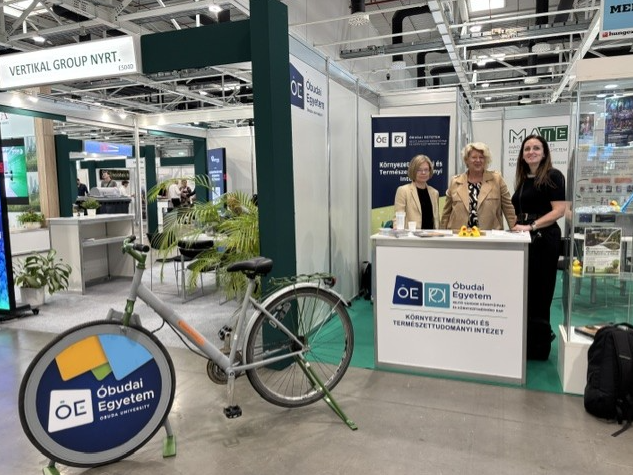
Obuda University is participating in ENVIRONTEC powered by ÖKOINDUSTRIA 2026, an international environmental technology exhibition and business forum held at HUNGEXPO Budapest from 7 to 9 October 2026. The event provides an opportunity to showcase innovative university developments and explore the latest technological solutions supporting environmental protection and sustainability.
As one of the region’s key environmental technology events, ENVIRONTEC brings together industry professionals, researchers, businesses and future engineers. Visitors can discover emerging trends and technologies in water management and environmental remediation, the circular economy and waste management, energy efficiency, renewable energy and eco-innovation.
Students can also expand their professional knowledge by attending conferences organised by KSZGYSZ and MaSzeSz, as well as business-to-business (B2B) meetings. These activities offer valuable opportunities to establish professional connections, gain industry insights and explore future career opportunities. The participation of the Czech Republic as this year’s guest of honour also highlights the importance of international cooperation and knowledge exchange in environmental technology.
Innovative Technology for Air Quality Monitoring
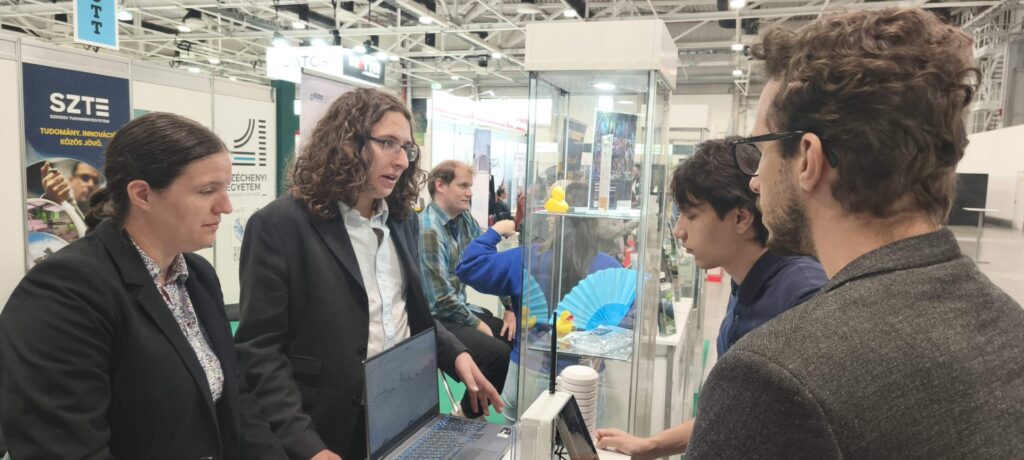
On the second day of the exhibition, Döniz Borsos, Assistant Lecturer, and her student, Benedek Horváth, presented their self-developed particulate matter monitoring device. Featuring a redesigned enclosure, LoRaWAN communication technology and an integrated weather station, the device automatically collects and transmits air quality and meteorological data.
The system supports the monitoring of environmental conditions and can contribute to more informed decision-making in urban environmental management. By combining air quality measurements with meteorological data, the development offers a practical approach to understanding environmental conditions and supporting efforts towards healthier, more sustainable urban environments.
The project demonstrates how university research, student involvement and applied engineering can come together to address real-world environmental challenges.
Learn more about the project:
“Not Just Thin Air – We Breathe the Same Air You Do”
Green Mobility: Engineering for Sustainable Transport
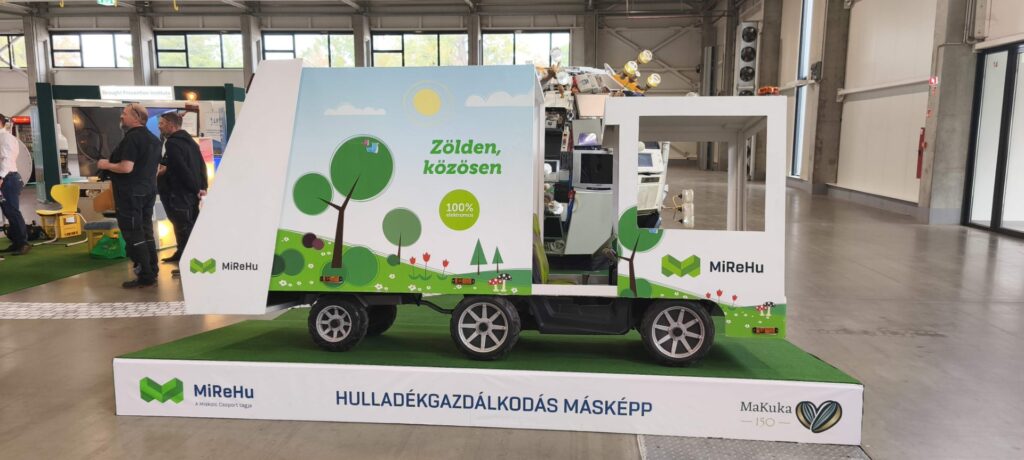
The exhibition also featured engineering developments in sustainable mobility. Under the leadership of Tamás Sándor, Assistant Lecturer, an innovative project related to the future of environmentally conscious transport was presented.
The electric bus development project carried out in cooperation between Ikarus and Óbuda University supports the advancement of sustainable public transport technologies. The collaboration illustrates how cooperation between academia and industry can translate engineering expertise into practical solutions for the transport sector.
The development contributes to ongoing efforts to improve public transport technology and reduce the environmental impacts associated with mobility. It also highlights the role of university–industry partnerships in advancing engineering innovation and developing transport solutions for the future.
Learn more:
Ikarus and Óbuda University develop an electric self-propelled bus chassis
Turning University Knowledge into Sustainable Solutions
Óbuda University’s participation in ENVIRONTEC 2026 demonstrates how education, research and practical engineering can work together to address environmental and technological challenges.
The particulate matter monitoring device and the electric bus development represent two complementary areas of innovation: environmental monitoring and sustainable mobility. Both illustrate the potential of applied research, engineering expertise and industry collaboration to support the transition towards a more sustainable future.
Professional exhibitions such as ENVIRONTEC also provide valuable learning opportunities for students. By engaging directly with current technologies, industry representatives and real-world engineering challenges, students can connect their academic knowledge with practical applications, develop professional relationships and strengthen the competencies needed for their future careers.
Through these initiatives, Óbuda University contributes to the broader objectives of the United Nations 2030 Agenda for Sustainable Development, particularly those related to health, innovation, sustainable cities and climate action.
We would like to thank our colleagues and student for their contributions and for representing the University’s developments at the exhibition.