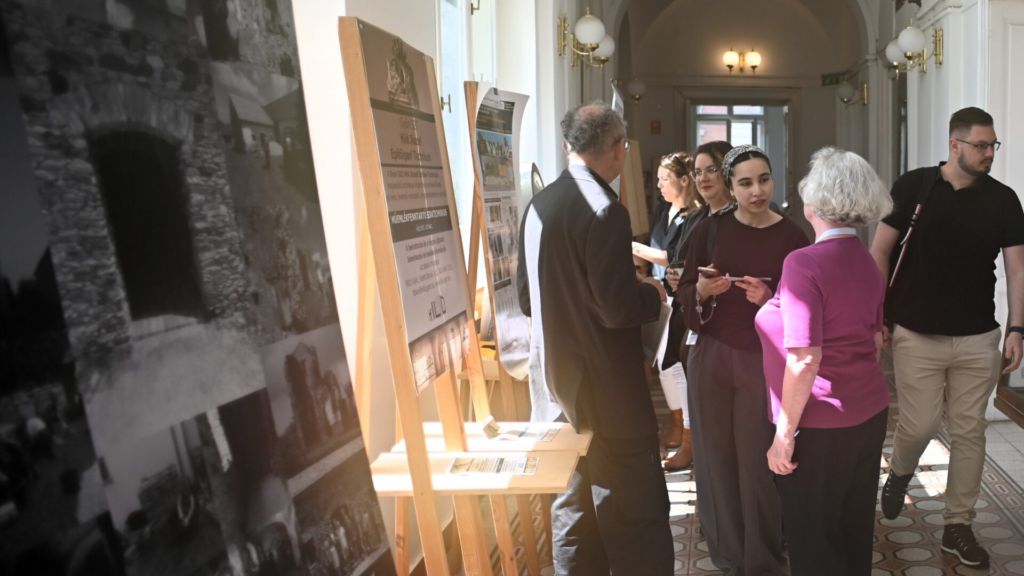
After four years, the annual conference organized by the Ybl Miklós Faculty of Architecture and Civil Engineering has become a well-established tradition. This year’s event took place on May 8 in the historic building on Thököly Road. The central theme of the conference was “East Central Europe: Let’s Build Together”, focusing on the identity, building culture, and communities of East-Central Europe. At the same time, the motto aimed not to limit but to inspire the speakers in shaping their presentations.
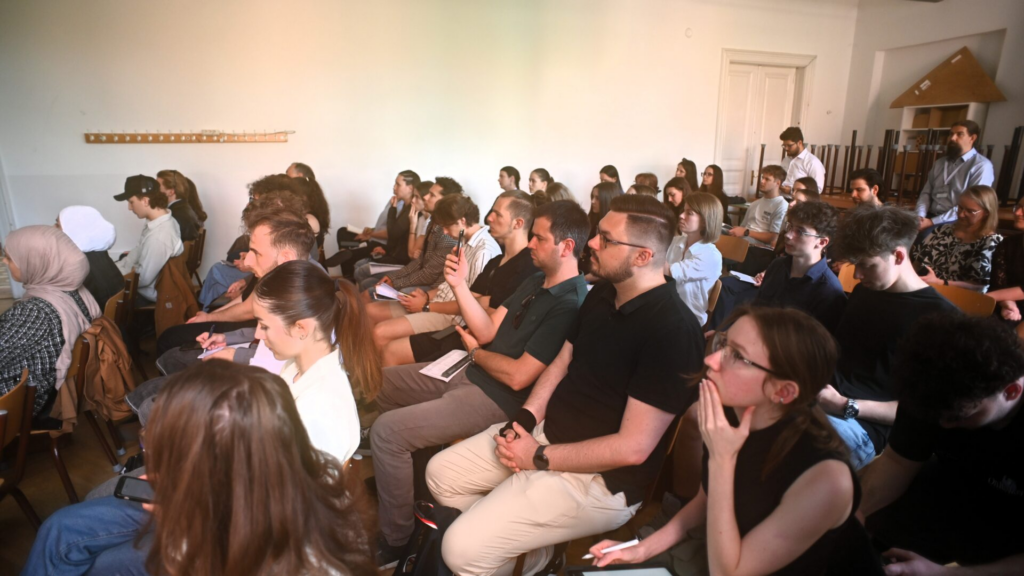
Accordingly, this year’s conference once again showcased remarkable diversity in both topics and participants. Nearly 140 speakers and a large number of exhibitors contributed to the event. Researchers, practitioners, and academics from Hungary and abroad presented their work in 23 thematic sections held in two languages.
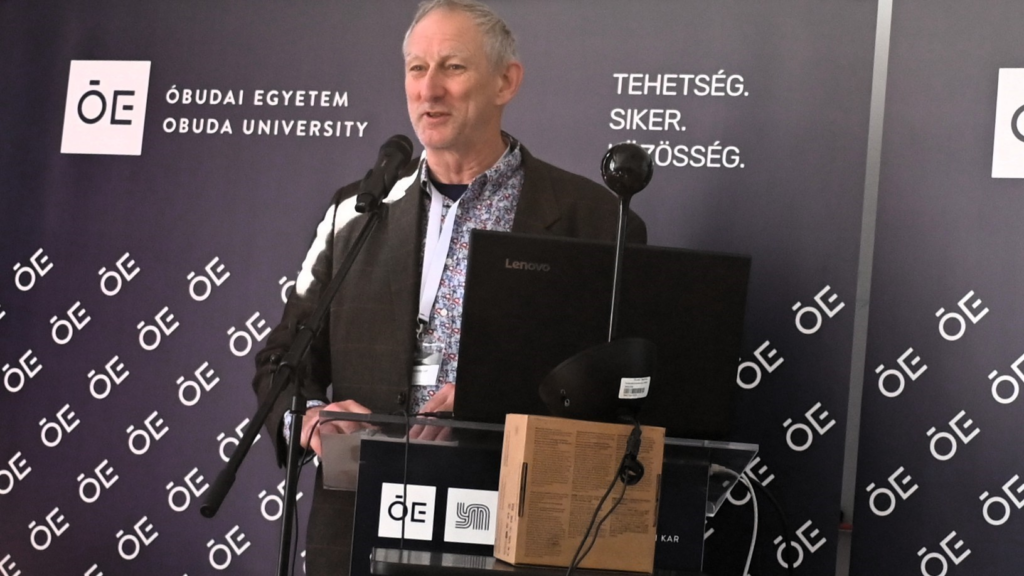
Dr. András Horkai, Associate Professor and Deputy Head of Department, welcomed the participants and expressed his gratitude to everyone involved in organizing the conference. Special thanks were extended to the founders of the conference series, Dr. habil. Viktória Sugár, Vice-Rector for Sustainability and Strategic Development, and Dr. habil. Zsuzsanna Fáczányi, Vice-Dean for Research, as well as to Rector Prof. Dr. Levente Kovács and Dean Prof. Dr. Anthony Gall for their support.
Prof. Dr. Anthony Gall emphasized that the conference has undergone significant development over the past four years. The range of speakers and topics has broadened to such an extent that every participant can now find sessions relevant to their own interests. Addressing the audience, he noted that the event’s unique character is shaped by its attendees, who together create an international scientific community year after year. He also highlighted that the true value of research lies in knowledge-sharing and in the professional dialogue that emerges around different questions and disciplines. As Dean of the Ybl Faculty, he expressed appreciation to the organizers and colleagues whose dedicated work made the conference possible.
Representing the leadership of Óbuda University and the organizing committee, Dr. habil. Viktória Sugár welcomed the participants and, as one of the founders, expressed her satisfaction with the continuously growing interest in the conference. Reflecting on the year’s motto, she highlighted the importance of Central European values and the inspiring diversity of topics connected to them. In closing, she praised the strong and cohesive community of the faculty, which creates not only a professionally high-level scientific event but also the warm and welcoming atmosphere characteristic of the institution’s everyday life.
This year, for the first time, the plenary lecture was delivered by an international expert: Richard P. Anderson from the Department of Architectural History and Theory at the University of Edinburgh. His presentation explored the development of East-Central European architecture during the Cold War. Showcasing the latest findings of his ongoing research, the lecture placed architecture and construction within a broader historical and social context. It revealed the interconnected professional discourses among Hungarian, Polish, Romanian, Czechoslovak, and East German architects, whose debates reflected similar professional and political concerns.
The Scottish professor’s thought-provoking presentation provided an external perspective on the region’s relationship with modernism, the work of the Hungarian CIAM group, and the architectural achievements that continue to shape both the built environment and contemporary architectural thinking. One of the most fascinating aspects of the lecture was its exploration of the professional realities hidden behind the official political agenda — beyond representative documents, political visits, and carefully staged photographs.
The presentations were organized across three sessions and eight rooms, grouped thematically and by language. Sustainability remained a key focus, reflecting both the faculty’s profile and today’s global challenges. Topics ranged from buildings to urban-scale sustainability issues. Alongside discussions on engineering achievements, infrastructure development, innovative technologies, and algorithm-based design methodologies, many presentations also addressed the preservation and management of architectural heritage, vernacular architecture, and local cultural values.
Compared to last year, an important change was that doctoral students from the Doctoral School of Architecture, Design and Technology presented their research within thematic sections rather than in a separate session. The doctoral school, now entering its second year, has grown into a young and dynamically developing academic community with an increasingly diverse range of topics and participants.
Another new feature was the participation of awardees from the University Research Scholarship Program, who presented practical outcomes and project-based research within the section “Spatial Use in Artistic Institutions.” Master’s students — representing the next generation of researchers — enriched the conference with innovative perspectives and future-oriented ideas reflecting the viewpoints of the newest generation.
The interaction between professional practice and community engagement also became a prominent topic in several theoretical research sessions. Questions related to 20th- and 21st-century architectural directions, contemporary trends, and alternative spatial dimensions inspired multiple panels, including presentations on current issues in architectural education, career models of women architects, and the self-reflective and critical intersections between architecture and art.
Reviewing the overall program, it becomes clear that the diversity of topics presented by the speakers provides an excellent reflection of the increasingly broad horizons of architecture and engineering today. Beyond mainstream economic and construction industry developments, the conference increasingly addressed social, community-based, and locally rooted values and challenges.
In addition to the dedicated efforts of the organizing committee of the Ybl Faculty, this year’s event was also supported by the National Cultural Fund of Hungary and professional journals such as Magyar Építőipar, Magyar Építőművészet, Metszet, and Ybl Journal of the Built Environment, whose contributions made both the conference and the publication of subsequent scientific papers possible.