The Rejtő Sándor Faculty of Light Industry and Environmental Engineering at Óbuda University stands out in the Hungarian higher education landscape with its specialized programs, close-knit atmosphere, and deeply rooted pedagogical mission. Together with Dr. László Koltai, Dean of the Faculty, we explore how an engineering degree can become a true compass in the noise of the digital age and in the shadow of the ecological crisis. We learn why personal attention is essential for Generation Z, how artificial intelligence is integrated into everyday education, and why those working here see themselves as “guides” on the steep paths of science.
Dr. László Koltai is the Dean of the Rejtő Sándor Faculty of Light Industry and Environmental Engineering at Óbuda University and an associate professor. After earning his degree in light industry engineering, he obtained his PhD in 2010 and habilitated in materials science in 2017. His field of expertise includes paper, printing, and packaging technology, in which he is an internationally recognized researcher and author of more than 130 scientific publications. During his career, he has held several leadership roles in professional organizations, including serving as Vice President of the Paper and Printing Technical Association. He represents member companies in the National Association of Packaging and Materials Handling, and in the national Creative Industry Skills Council he acts as a key link between academia and industry in the fields of light industry, printing, and packaging technology. His work was recognized with the Lajos Lengyel Award in 2014, and in 2023 he received the Grand Prize of the Székelyudvarhely Foundation for his support of Hungarian higher education beyond the borders.
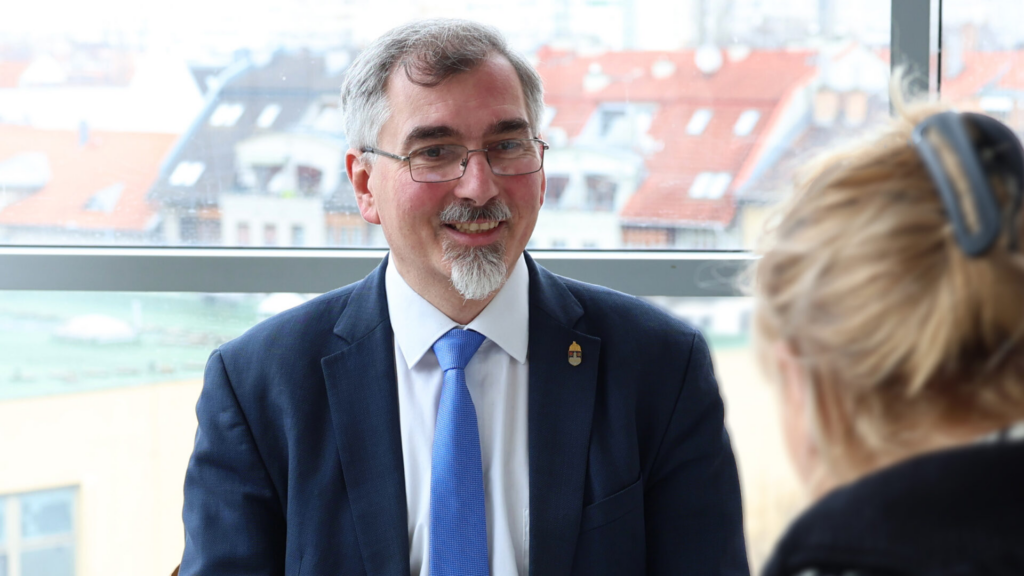
With nearly three decades of experience at the Rejtő Faculty, if you had to summarize in a single thought what special added value this community provides to its staff and students, what would it be?
For me, Rejtő is not just a workplace, but a highly inspiring intellectual workshop, where I still happily arrive every morning after thirty years. I believe the most noble part of our mission is shaping perspectives. We do not only transfer technological knowledge to incoming students, but also a way of seeing the world. We help them understand complexity not as threatening chaos, but as a readable and comprehensible system. Our goal is that those who graduate from here leave not only with professional knowledge, but also with a confident intellectual attitude. Sustainability, creative design, and cross-border education all converge here. Although we are the smallest faculty in terms of student numbers, I believe we significantly contribute to making the university as diverse and humane as it is today. At our faculty, engineering precision is interwoven with applied arts and environmental responsibility.
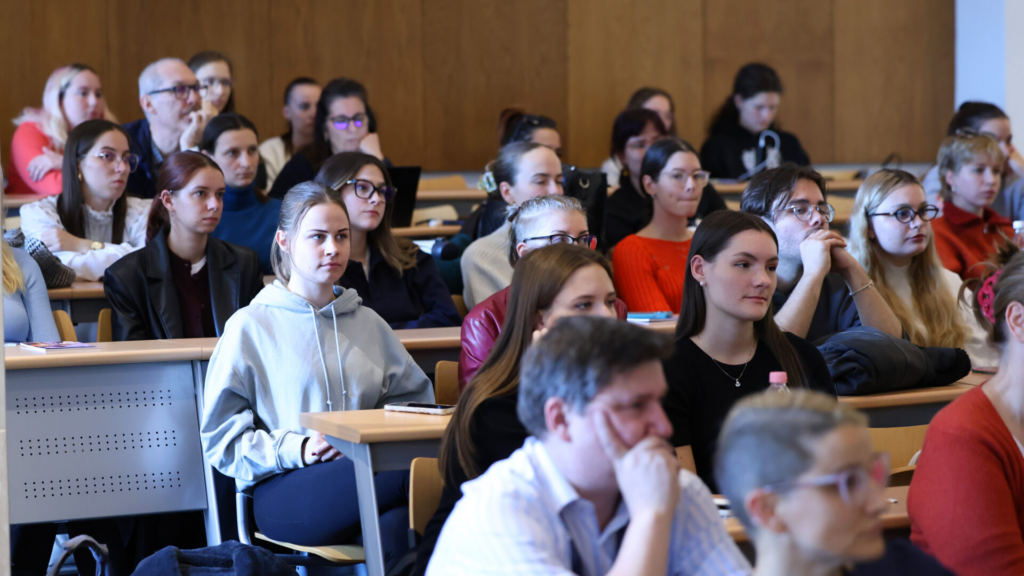
You mentioned that Rejtő is the smallest faculty at the university, which allows for more personal attention. How does this appear in everyday teaching practice, especially with Generation Z, who were born into the digital world?
At our faculty, a student is not an anonymous Neptun code, but a face, an individual personality. Today’s young people, although they live in the online space, strongly require personal feedback and care. More introverted students can be engaged in joint work through personal attention and empathetic support. We see ourselves as “guides.” The student entrusts themselves to us, and we lead them through the mountain ridge of knowledge on a safe yet exciting route, taking their individual abilities into account.
Technological development and artificial intelligence are fundamentally transforming education. How do you adapt to these changes, and what remains of the educator’s role in a world where factual knowledge is instantly accessible?
AI is both a daily tool and a way of thinking for us. Education can no longer be limited to transferring data, as it is available at the click of a button. “Soft skills,” systems thinking, and critical thinking have become much more important. We focus on experiential learning. We strive to create a practical, vibrant environment that can compete with the constant stimulation of the digital world.
In one of our previous conversations, you spoke very sharply about the erosion of trust in science. Why do you consider this one of the greatest dangers today?
Because in a technology-based society, it is a tragedy if the masses view science with suspicion due to popular misinformation. It is shocking to see how theories circulating on TikTok—such as dangerous substances being presented as miracle cures—can reach tens of thousands of views. We grew up with scientists and astronauts as heroes; today, influencers set the trends. Restoring trust in science is crucial, because only measured and verified knowledge can offer real solutions for survival in the face of populist pseudoscience and information chaos. Engineers are urgently needed; in reality, our lives are sustained by the quiet, disciplined work of professionals.

Looking at recent admission statistics, how have the popularity of programs evolved, and which areas attracted the most students at the Rejtő Faculty?
Our programs, especially environmental engineering and packaging technology, have become highly sought after due to their specialized, immediately applicable knowledge. Environmental engineering has become one of our flagship programs, driven by demand for English-language and dual training programs, as well as the rise of sustainability and green industrial technologies. In addition, our traditional and unique light industry engineering program has also been highly attractive, combining creative industries with engineering knowledge and offering valuable industry experience. Similarly popular is industrial product and design engineering, which combines engineering precision with artistic approach, generating significant interest.
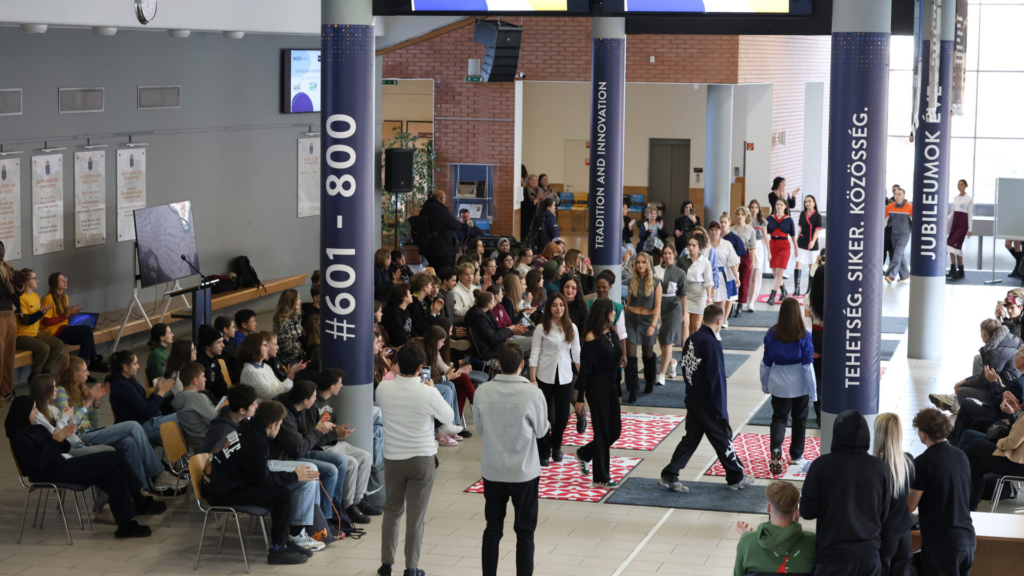
What specific fields do you offer knowledge in that cannot be obtained elsewhere in the country?
Light industry engineering is only taught here in Hungary. Within environmental engineering, our research in water systems and green energy is also unique. Across product design, garment design, and packaging technology, sustainability is a common foundation. Knowledge, creativity, and sustainability define our daily work.
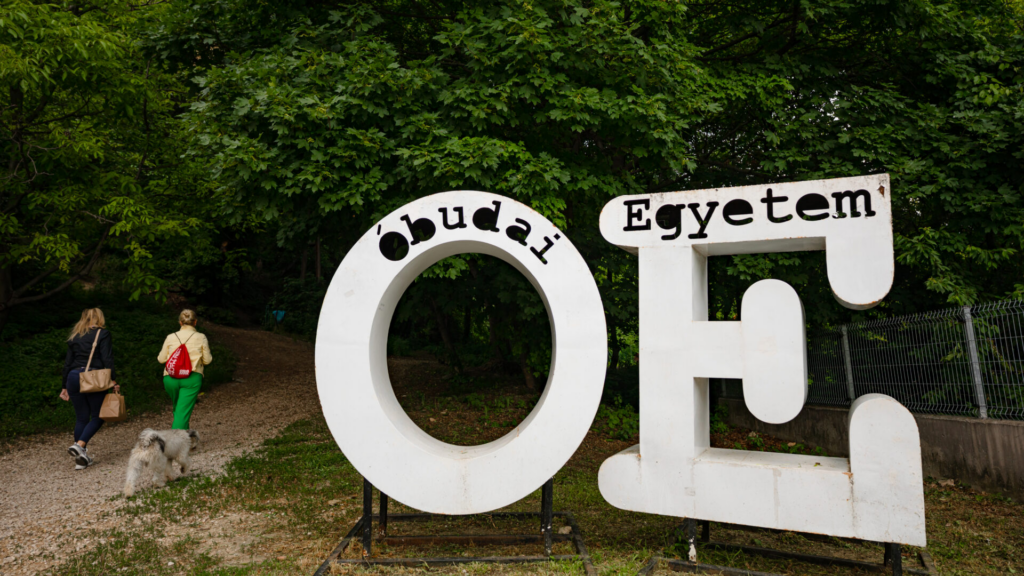
Returning to environmental engineering, you described the global ecological situation as rather alarming and see environmental education as a mission. Why is this so critical for future engineers?
I believe this program is a form of rescue work being carried out at the very last moment. Young generations instinctively feel this. They are no longer only aware of environmental problems intellectually, but are emotionally engaged as well. As engineers, their task is to mitigate damage and prepare society for change.
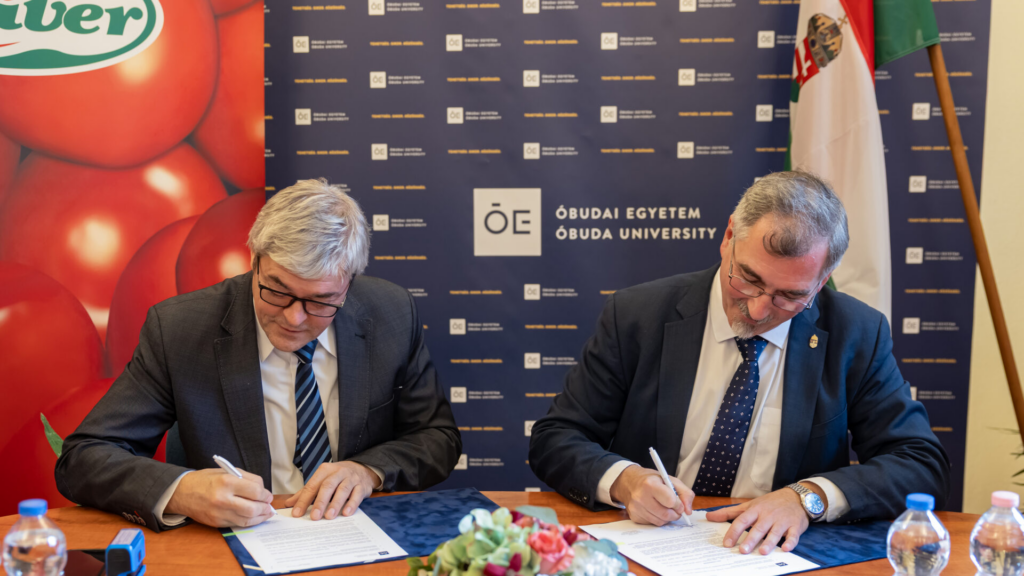
What is the feedback from the labor market? How in demand are graduates of the Rejtő Faculty, and where is the greatest shortage of professionals?
Our experience, graduate tracking data, and extensive partner network all confirm that our students are often recruited directly from university by leading national and international companies. There is enormous demand for our specialists in printing, packaging technology, paper processing, environmental protection, and sustainability.
The Rejtő Faculty is also known for its cross-border presence. What is the secret of the continued success of the Székelyudvarhely program, and how is teaching there different?
The secret lies in human relationships. It is extremely important for our faculty that high-quality engineering education is also available in Székelyudvarhely. We see the determination and ambition of young people there. We believe we are building the future together, so students in Transylvania receive the same practical, green-oriented education as in Budapest.
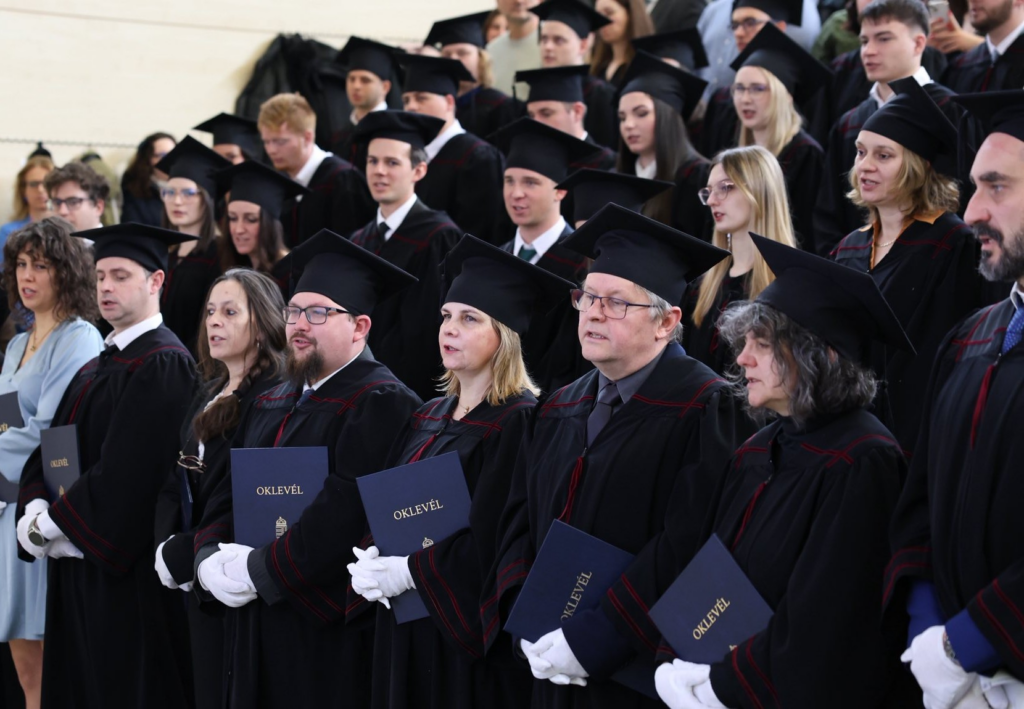
What message do you give students at graduation?
I tell them that their mission as engineers is to make our environment more beautiful, safer, and better. We have accompanied them as guides for part of the journey, but on the other side of the mountain, they must continue on their own. I hope they leave Rejtő not only with knowledge, but with the confidence that they can understand and shape this highly complex world.