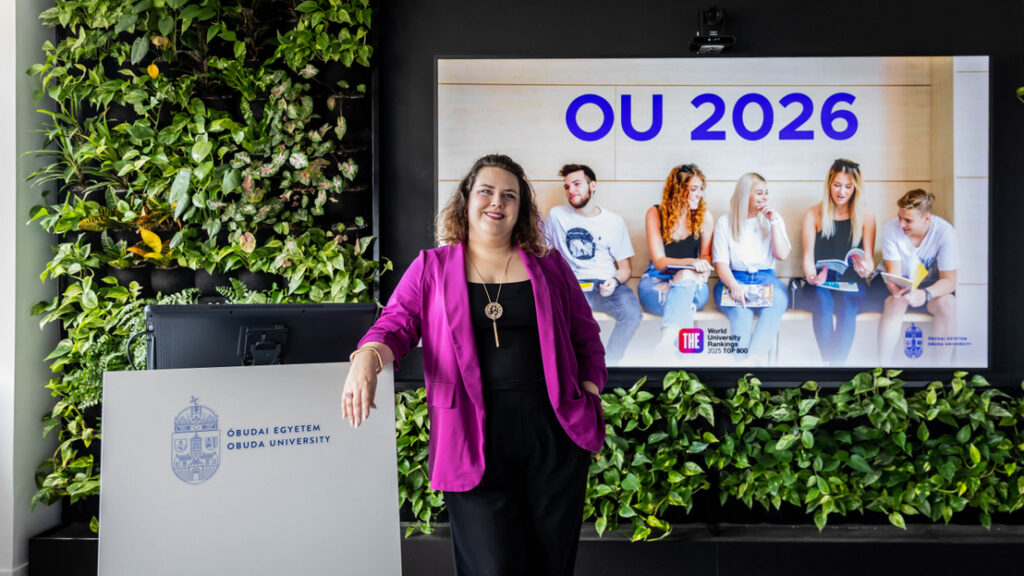
Dr. Viktória Sugár, Vice-Rector for Sustainability and Strategic Development at Óbuda University, recently shared insights into the challenges of urban heat islands, the role of green infrastructure, and the future of sustainable urban development.
As heatwaves become more frequent and intense, cities face growing environmental and public health challenges. Research shows that well-designed and strategically placed green spaces – including urban forests, parks, and multi-layered vegetation systems – can significantly reduce urban temperatures, improve local microclimates, and contribute to healthier living environments. Researchers at Óbuda University have been investigating these relationships for several years through international collaborations.
One of the key initiatives in this field is the GreenQual project, which brings together researchers from Hungary, Japan, and Poland. The project aims to better understand how urban green infrastructure can be designed and managed to maximize its positive impact on local climate conditions. By comparing data and experiences from Budapest, Kraków, and the Osaka–Kyoto region, the research team contributes to international knowledge exchange on sustainable and climate-resilient cities.
According to Dr. Sugár, sustainability is not only a global objective but also a practical tool for improving urban quality of life. Through interdisciplinary research and international partnerships, Óbuda University seeks to provide scientific evidence that supports the creation of more livable, healthier, and climate-adaptive urban environments for future generations.
The full interview is available on the Index website.