Obuda Uni Venture Capital (OUVC), the investment company of Óbuda University, is supporting BDN Automotive Kft.’s innovative hydrogen-diesel engine development project as a financing partner. As part of the initiative, BDN and MOL-LUB Kft. have entered into a strategic cooperation agreement to jointly develop engines powered by hydrogen and alternative fuels, as well as the related lubricant technologies. The project is an outstanding example of cooperation between the university innovation ecosystem and market players, with Óbuda University’s investment background playing a key role in bringing forward-looking Hungarian technologies to the market and supporting their industrial validation.
As a financing partner, alongside Hiventures, BDN’s previous investor, Obuda Uni Venture Capital has made a significant contribution to launching the BDN Engine Development Platform, which combines artificial intelligence-supported calibration, simulation and combustion analysis to reduce development time and costs. Earlier stages of the development were also supported by Hiventures.
The strategic cooperation combines MOL-LUB Kft.’s expertise in lubricant development and oil analytics with BDN’s expertise in engine development and engine control. The university research and testing background for the project was provided by the engine testing laboratory of the Department of Energy Engineering and Systems at the Budapest University of Technology and Economics.
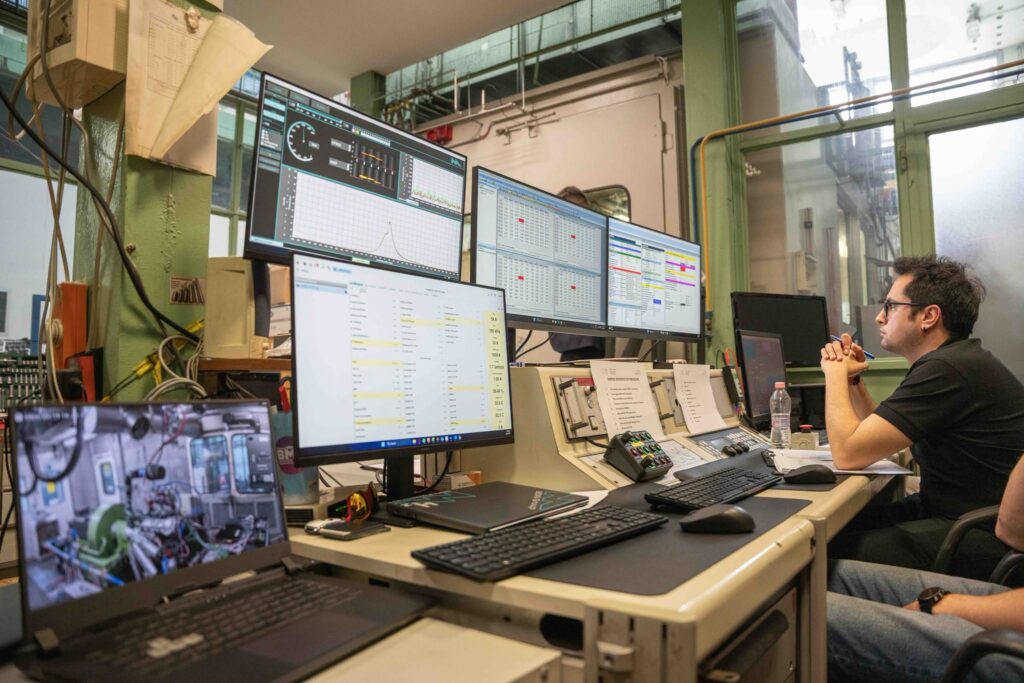
The test-bench measurements produced significant technological results. During the development calibration, a maximum hydrogen share of 83% was achieved, meaning that at the given operating point, the majority of the energy input was supplied by hydrogen. At the most favourable operating point, specific carbon dioxide emissions were reduced from 894 to 192 grams per kilowatt-hour compared with conventional diesel operation, representing a direct reduction of approximately 78.5%. Across the eight-point test programme, a weighted average emission reduction of approximately 56% was demonstrated.
A key advantage of the developed hydrogen-diesel technology is its flexibility. If hydrogen supply is temporarily unavailable, the equipment can continue to operate fully on diesel. This dual-fuel capability can facilitate the gradual introduction of green technologies without compromising operational reliability.
The primary application area of the development is the energy sector, particularly the decarbonisation of electricity generation for industrial facilities and data centres through hydrogen-based power generation equipment. Another key direction is the conversion of existing diesel-powered railway vehicles to hydrogen-diesel operation.
Nimród Ludescher, Managing Director of BDN Group, emphasised that by converting existing engines, the company aims to provide a pathway for reducing emissions that builds on equipment already in operation. He added that the next steps include demonstrating durability and real-world performance, launching pilot projects and preparing for market entry.
With the project now entering its next phase, BDN is seeking additional investors and industrial and energy-sector pilot partners—including data centre operators, industrial companies and railway companies—to participate in joint testing and operational validation activities.