Óbuda University made a strong impression at Brain Bar, one of Europe’s leading festivals dedicated to the future. The University’s presence was marked by high visitor numbers, a vibrant atmosphere, inspiring young people and packed professional sessions. As one of the event’s popular exhibitors, Óbuda University welcomed visitors with interactive technology demonstrations, information on study opportunities and thought-provoking discussions on two stages.
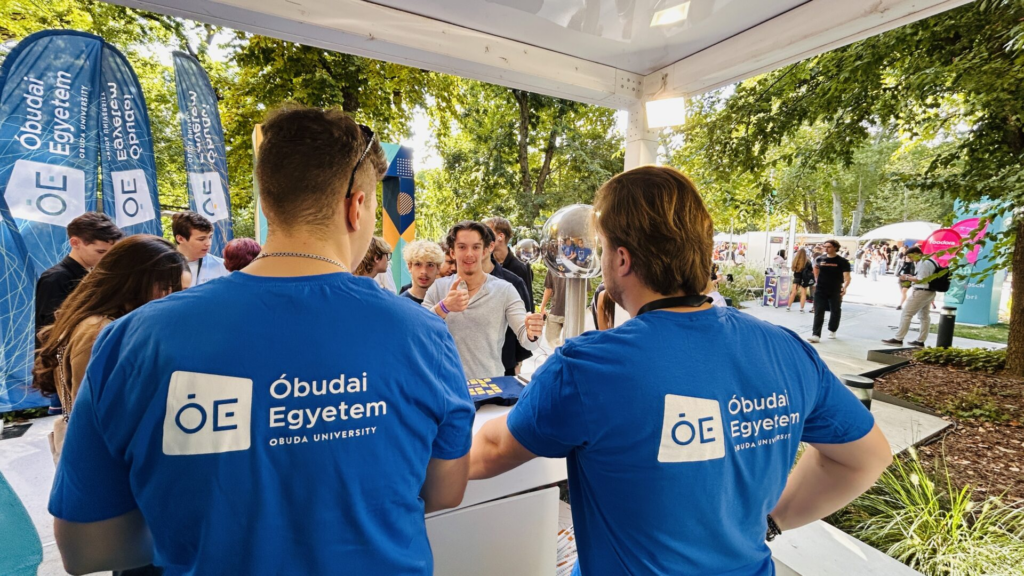
Throughout the two-day festival, the University’s stand attracted a steady stream of high-school and university students interested in discovering educational opportunities and learning how Óbuda University prepares future engineers, IT professionals and innovators for a rapidly changing technological environment.
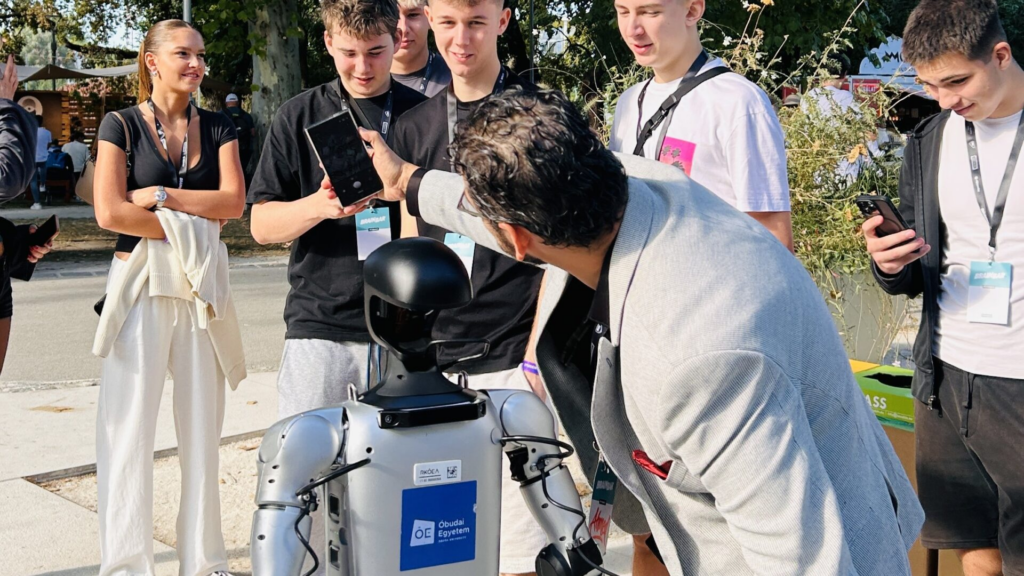
The humanoid robot and robotic dog were among the biggest attractions, giving visitors an engaging, hands-on insight into emerging technologies. The AI-Ready quiz also proved highly popular, allowing participants to assess how prepared they are for the challenges of a working environment and society increasingly shaped by artificial intelligence. The Van de Graaff generator provided an interactive scientific experience, while the University’s bear mascot became a favourite for photos and selfies.
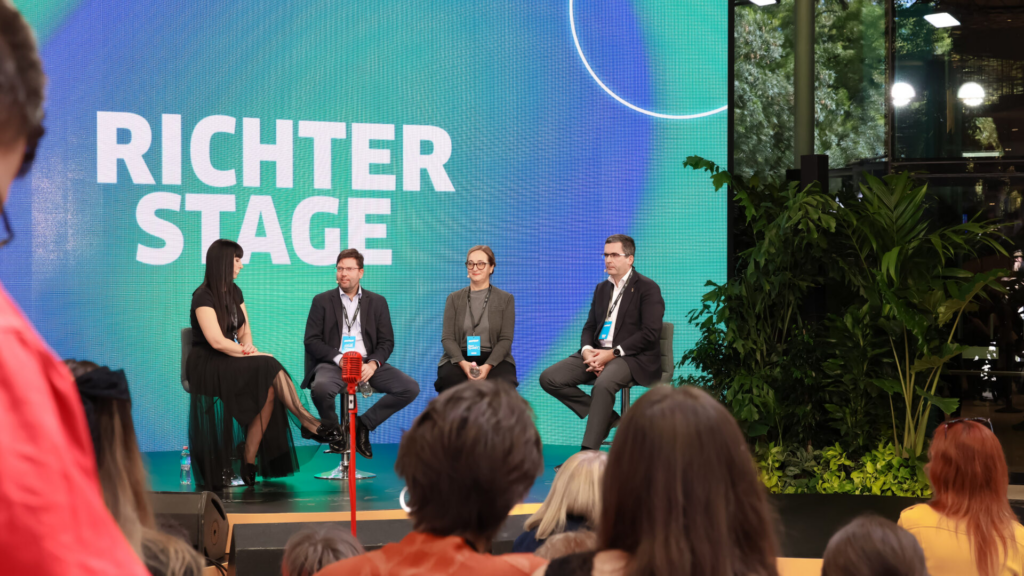
Óbuda University also contributed actively to the festival’s professional discussions about the future. Prof. Dr. Levente Kovács, Rector of Óbuda University, joined Zsuzsanna Naderi, State Secretary responsible for vocational and adult education, and Ádám Horváth, a digital education expert, for a panel discussion on the Richter Stage, moderated by organisational psychologist Dr. Linda Szijjártó.
The discussion focused, among other topics, on the knowledge and skills young people need in the age of AI—not merely to adapt to technological change, but to actively shape their own careers and contribute to the development of a technology-driven society.
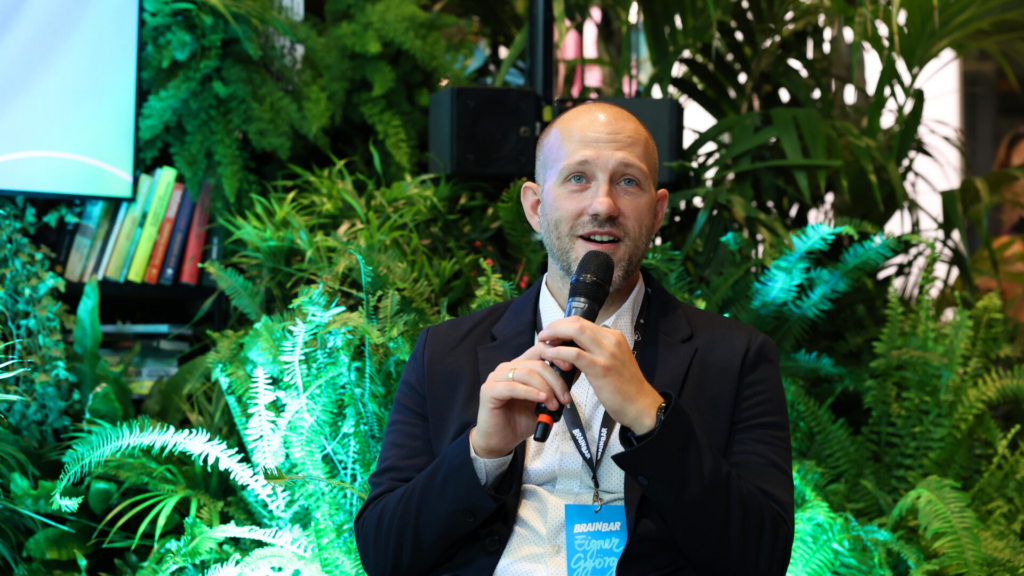
Immediately afterwards, Prof. Dr. György Eigner, Dean of the John von Neumann Faculty of Informatics, took the stage at Library by Libri. His session highlighted the human side of developing and working with cutting-edge technologies, addressing everyday professional challenges as well as the importance of mental balance and responsibility. His message underlined that technological progress must be considered together with the human dimension if it is to contribute to a responsible and sustainable future.
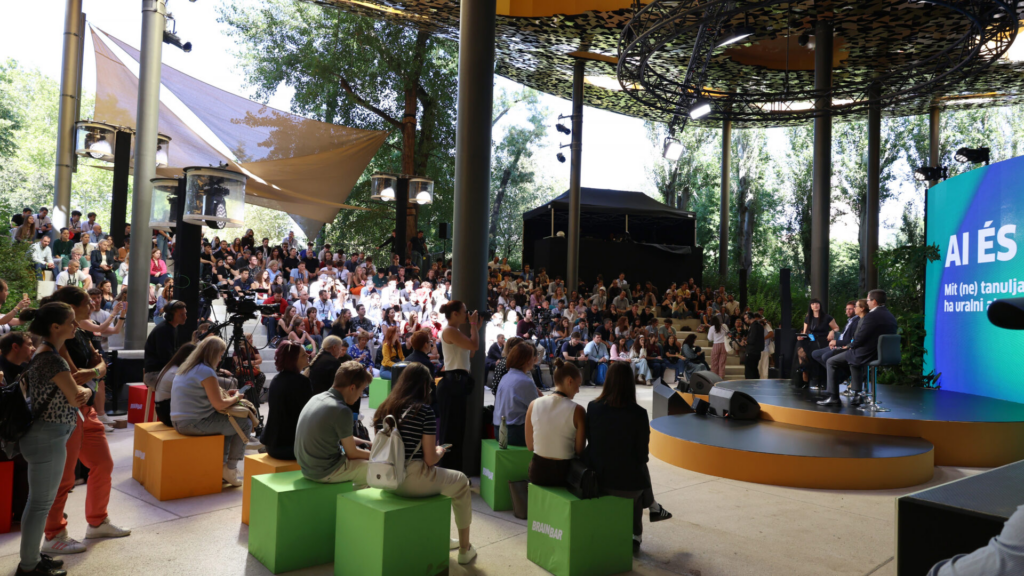
Both professional sessions attracted full audiences. In keeping with Brain Bar’s interactive spirit, visitors were not simply passive listeners: they were encouraged to ask questions, share their views and actively participate in discussions about the future.
Óbuda University’s participation in Brain Bar demonstrates that preparing young people for the future goes far beyond technological knowledge alone. Alongside advanced engineering and IT skills, critical thinking, adaptability, mental well-being, responsible use of technology and meaningful social dialogue are becoming increasingly important. Together, these competencies can empower the next generation to shape the technological society of the future in an informed, responsible and sustainable way.