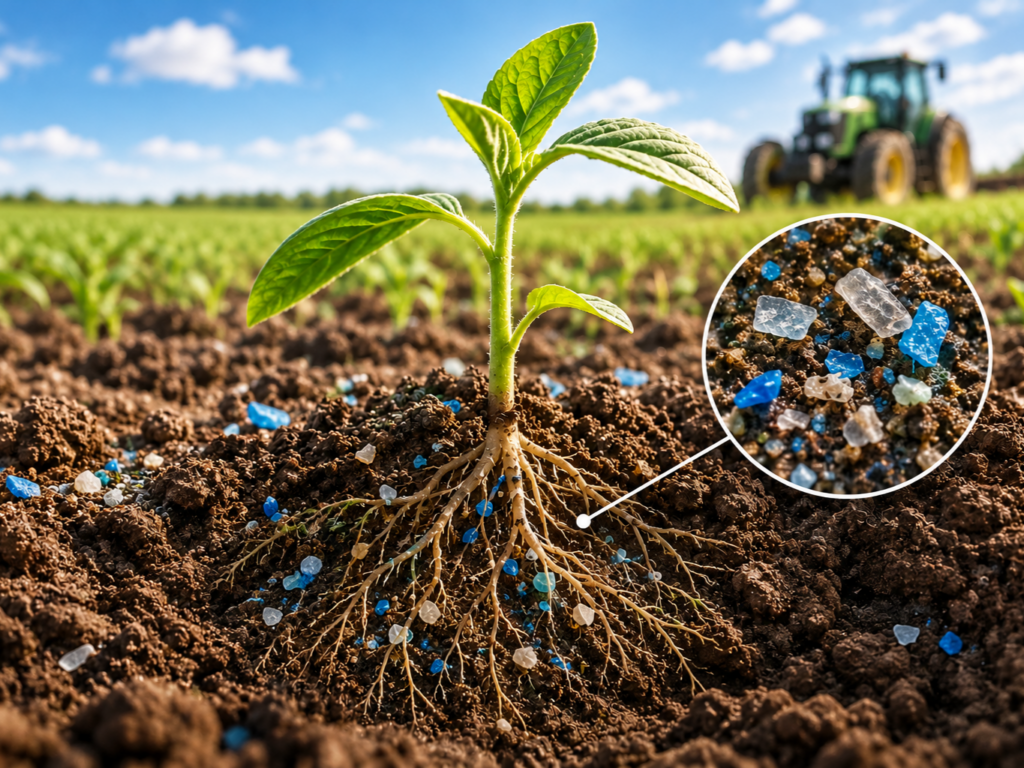
When people think about plastic pollution, most immediately picture vast islands of floating waste in the oceans. However, a much quieter yet equally concerning process is taking place beneath our feet. I chose agricultural soil contamination by microplastics as the focus of my project because it represents a critical environmental issue that remains significantly underrepresented in public discourse. Plastics entering our agricultural soils can threaten soil biodiversity and potentially compromise future food security. I therefore felt it was particularly important to raise awareness of this largely invisible environmental crisis.
Understanding and communicating this issue is essential because prevention is one of the most effective ways to stop its spread. Plastics entering the soil, whether originating from biodegradable agricultural films or sewage sludge, can pose multiple risks. They may contribute to soil degradation, alter soil structure and negatively affect soil-dwelling organisms. Furthermore, microplastics can interact with potentially harmful substances, including heavy metals and pesticides, raising concerns about their possible transfer through food chains. Promoting informed and environmentally responsible behaviour is therefore in everyone’s interest.
The primary objective of this project is to address the lack of public awareness through accessible, science-based environmental education. The entire campaign is available on a dedicated Instagram page, where information is communicated through visually engaging and easy-to-understand posts: https://www.instagram.com/mikroafoldmuvelesben
The campaign covers a broad range of topics, starting with the sources of microplastics and their movement through agricultural soils. It explores direct sources, such as the fragmentation of agricultural plastic mulch films, as well as indirect sources, including organic fertilisers and urban dust originating from tyre wear. It also demonstrates that contamination does not remain in one place: rainfall can transport microplastics into deeper soil layers, wind can disperse them, and even ploughing and soil-dwelling earthworms can contribute to their movement.
Another important aspect of the campaign focuses on the effects of microplastics on soil functioning and their potential entry into the food chain. It explains how artificial microbial communities, known as the plastisphere, can develop on plastic surfaces. These microbial communities may influence soil processes, including greenhouse gas emissions, further highlighting the complexity of the problem. Particularly concerning is the possibility that nanoplastics can enter plant tissues through their roots. This may affect plant growth and crop productivity, while raising questions about the potential presence of plastic particles in edible plant tissues and, consequently, in our food.
Finally, the project does not focus exclusively on the problem but also explores possible solutions and future perspectives. It presents emerging scientific approaches, including plant-based biodegradable alternatives, bioremediation using plastic-degrading microorganisms, and soil washing technologies. The campaign also emphasises the importance of stricter environmental regulations, Extended Producer Responsibility (EPR), and public education. Technological innovation alone is not enough: protecting the agricultural soils of the future requires cooperation and commitment at every level of society.
By raising awareness of microplastic pollution in agricultural soils, this project aims to encourage more responsible practices, support environmental protection and contribute to a more sustainable agricultural future.
Zalán Péjó