The Re:Lindström 3.0 – Circular Intelligence: AI Upcycling Fashion Challenge project, jointly implemented by Lindström Group and the Rejtő Sándor Faculty of Light Industry and Environmental Engineering at Obuda University, has reached its first major milestone. During the first phase of the initiative, which is aligned with Obuda University’s AI-native strategy, a professional jury evaluated students’ sustainable, human-centred fashion designs developed with the support of artificial intelligence.
The programme is an excellent example of how industrial practice, higher education and technological innovation can come together in pursuit of a shared sustainable goal. By reimagining discarded workwear provided by Lindström, students are designing garments and collection pieces that embody the principles of the circular economy, innovative design thinking and digital creativity.
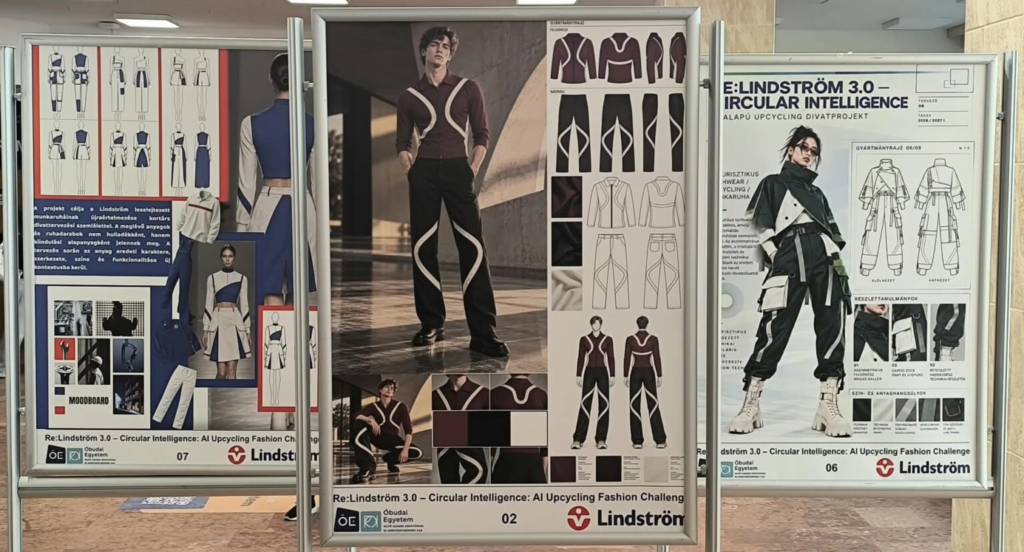
The Re:Lindström 3.0 – Circular Intelligence: AI Upcycling Fashion Challenge project, implemented in collaboration between Lindström Group and the Rejtő Sándor Faculty of Light Industry and Environmental Engineering at Obuda University, brings together sustainable fashion, circular design principles and AI-supported creative design. The initiative demonstrates how industrial expertise, higher education and technological innovation can work together towards a common goal. By giving discarded workwear supplied by Lindström a new purpose, students are creating garments and collection pieces that combine circular economy principles, innovative design thinking and digital creativity.
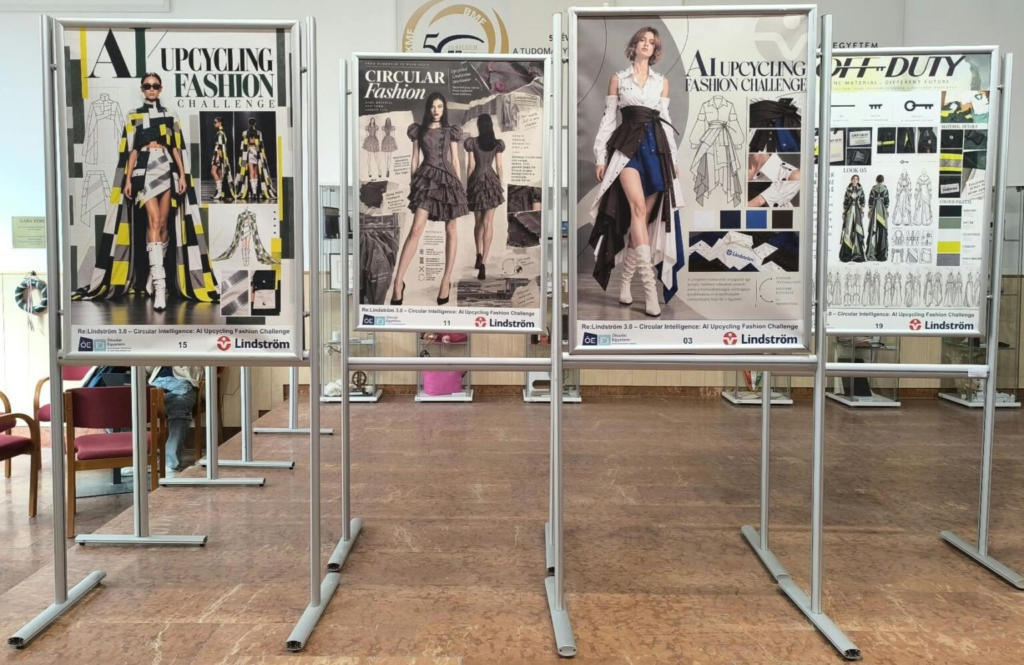
Artificial intelligence is used in the project not to replace designers, but to expand their creative possibilities. This approach is fully aligned with Obuda University’s AI-native strategy, which promotes the responsible, value-creating and human-centred application of AI technologies. In line with the Human-Centred AI approach, technology serves primarily to support and enhance human creativity, ensuring that students’ creative potential and conscious knowledge development remain at the centre of innovation.
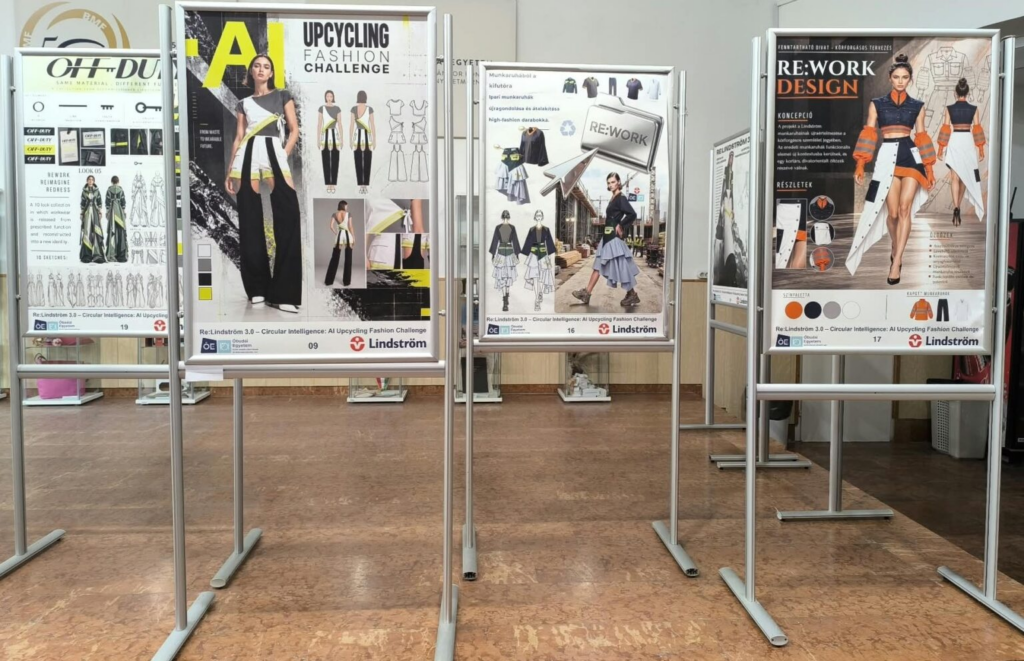
The students’ design portfolios and AI-generated visualisations were evaluated by a professional jury. The judging panel included Dr Dóra Papp-Vid, DLA, and Dr Edit Csanák, DLA, representing the Institute of Product Design, as well as Eszter Gulyás-Ujvári and Mátyás Juhász, Apparel Designer and Developer professionals representing the corporate partner, both of whom are Obuda University alumni.
The winners of the first milestone are:
1st place: No. 19 – Yevhenii Vitaliiovich Gryts
2nd place: No. 14 – Attila Uhrin
3rd place: No. 17 – Ágnes Strasser
Congratulations to all participating students on their inspiring work!
Alongside a pop-up exhibition held in the university’s main hall, the project will soon enter its next phase: the designs will be transformed into physical creations and presented to the wider public on the runway.