Energy efficiency in support of university sustainability is directly tied to the United Nations Sustainable Development Goal 7, Affordable and Clean Energy, which calls for ensuring global access to reliable, sustainable, and modern energy services, while increasing the share of renewable energy sources and improving energy efficiency.
Globally, buildings account for up to 40% of total energy consumption, making the built environment a key factor in increasing energy efficiency.
Obuda University is committed to sustainability and energy efficiency, principles that are reflected not only in the institution’s operations but also in its academic programs. In architecture training, students learn about sustainable design principles and technologies, while in building engineering programs, energy-efficient systems are given a prominent role.
The University’s energy advisor reports confirm that our institution aims to reduce energy use at both the educational and operational levels. While energy consumption decreased in 2023 compared to 2022, an increase was observed in 2024 due to the 1.5-fold expansion of the building stock. It is important to note, however, that the growth in energy consumption did not reach the same proportion as the building expansion, demonstrating the effectiveness of energy efficiency measures.
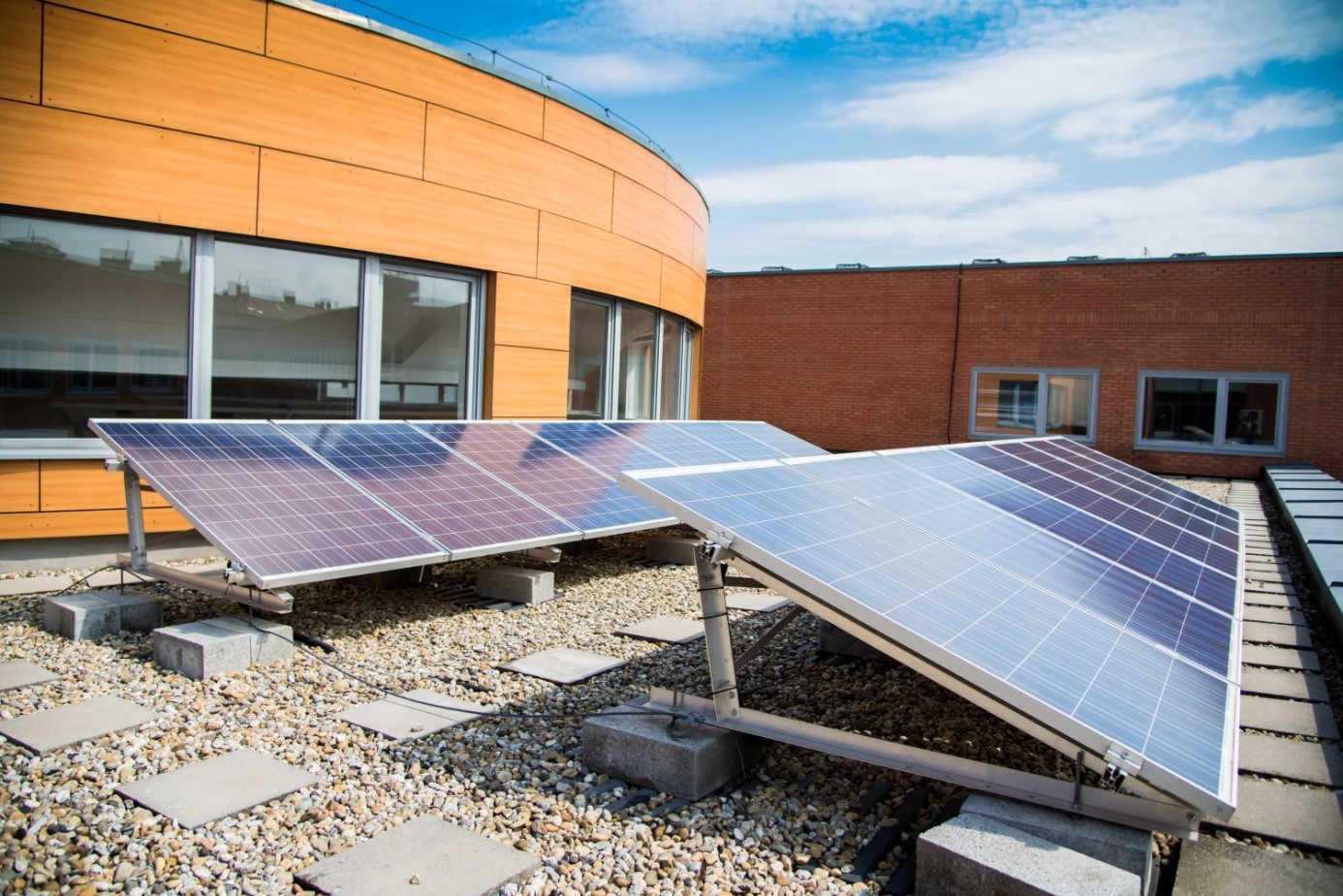
Electricity use at the University has been steadily decreasing thanks to energy-saving equipment and LED lighting. In addition, several of our campuses operate solar panel systems, contributing to the share of renewable energy sources.
A significant portion of heating demand is met by natural gas, but steps have also been taken to reduce this. For example, window replacements in the Ybl Miklós Faculty of Architecture and Civil Engineering building have reduced heat loss, improved indoor comfort, and lowered heating costs.
These measures are consistent with Act LVII of 2015, which aims to improve energy efficiency, reduce energy consumption, and decrease environmental impact.
Technologies applied at the University, such as long-life, low-energy LED lighting and intelligent building management systems, further enhance energy efficiency. These solutions are essential for a modern educational institution committed to sustainability.